Introducing Memories Upload: First-Person Video, Ready to Train Robots
Memories Upload, LUCI Pin and our Large Visual Memory Model work together to turn everyday first-person video into training-ready data for robotics labs.


For robots to actually work, they need internet-scale first-person video of how people get things done. Collecting that data at high quality takes the right hardware, models and infrastructure working together.
That is our expertise. We have spent over a year building the video model and infrastructure to collect this data at scale. Today we are launching Memories Upload, together with LUCI Pin and our Large Visual Memory Model (LVMM).
Why first-person video
Language models learned to write, reason and explain by training on the vast record of human knowledge published online. Robots need the physical equivalent: first-person video of people doing real work.
No one has yet built that record at the scale, diversity and quality robot training demands. The internet holds billions of hours of video, almost all of it filmed from the outside, missing the hands, tools and decisions a robot has to learn. The gap shows in the results. Stanford’s 2026 AI Index reports that robots succeed at 89.4% of household tasks in simulation and only 12% in real homes.
The frontier labs building generalized robotics models have converged on human video as the fastest route across that gap. Raw footage has become plentiful. Footage that is checked, indexed and labeled well enough to train on remains scarce.
Hardware: LUCI Pin and the Upload app
LUCI Pin is a lightweight, modular camera. At under 45g it is light enough to forget, and its wide field of view keeps both hands and the task in frame. It snaps onto wrist, chest, neck, cap or headband mounts, and two Pins pair for stereo capture.
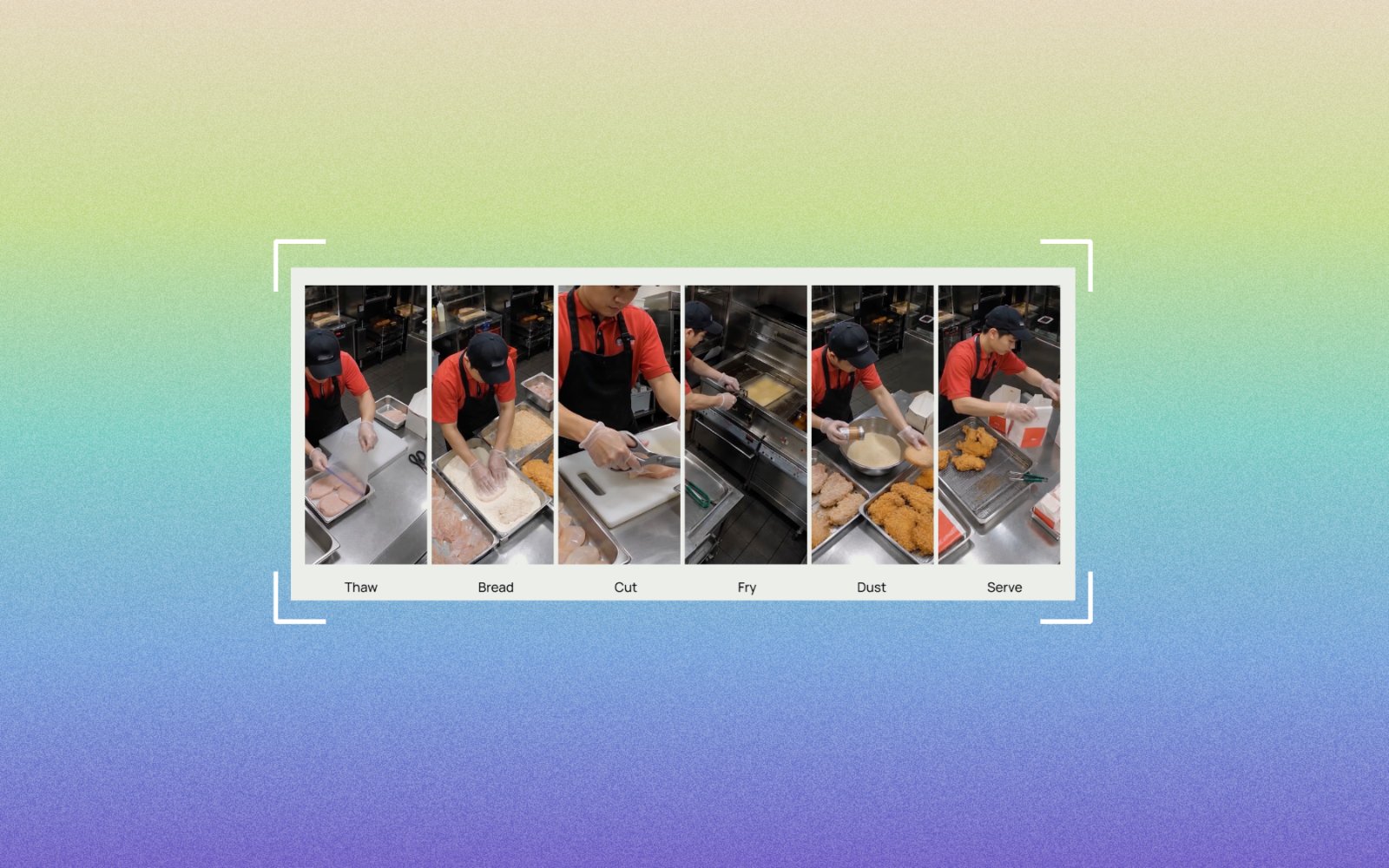
Contributors claim a task in the Memories Upload app, like making a coffee, prepping a restaurant kitchen, restocking store shelves, assembling parts or repairing equipment on a job site, and do it naturally. Footage uploads itself. Our AI scores how well the task was done, and every accepted hour earns pay, with higher rates for the hands-on household and workplace tasks robots most need to learn.
In terms of privacy, contributors agree to clear recording rules before they start, including never filming private screens or documents, and must have consent from the people they live or work with. We blur faces before any footage enters a training dataset, never sell audio, and let contributors delete a clip at any point before we pay for it.
Model: the Large Visual Memory Model
Every upload lands in the Memories.ai Video Data Lake, which we are filling across every task, environment and hardware setup. Quality is enforced at the infrastructure layer, above the point of capture. Every clip passes quality checks before it counts, we measure and sell accepted hours only, and human reviewers keep the quality bar where labs set it.
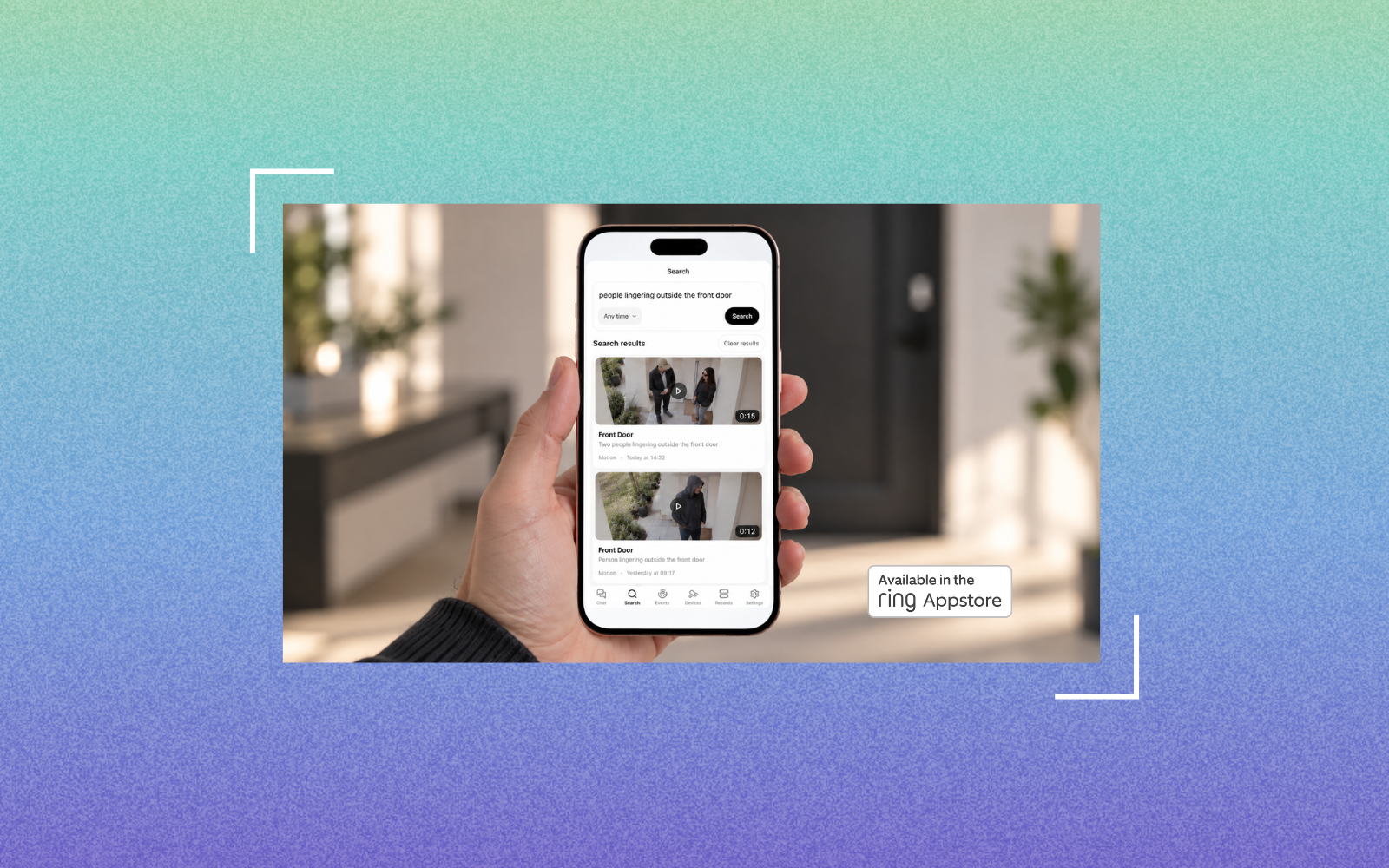
LVMM, trained by Memories.ai, then indexes every hour into captions and embeddings keyed to timestamps, and it all lands in a data lake teams can query agentically. It is not a labeling tool. It is a world indexer, frame by frame.
Infra: built to keep up
1M+ hours in 2 months, and hundreds of thousands more every month. Our pipeline keeps up, and we plan to scale to more than 10 million hours by March 2027.
Each hour is indexed in a single pass with ~95% fewer visual tokens, so the lake is searchable as fast as people record. The pipeline is built on NVIDIA Metropolis and NVIDIA Cosmos.
MCP tools on the lake let any agent work against it directly. A data agent takes a failure pattern or edge case, finds similar moments across the whole lake and returns a sub-dataset shaped for fine-tuning, in place of a labeling queue.
What robotics labs get
Labs get the videos and their indexes, ready to train. The training data is annotated egocentric video: step boundaries to ±0.3 seconds, action labels, narration, object masks and hand contact state. Paired with the procedure for each task, it teaches a model what the hands did, where a step went wrong and how the worker corrected it.
Training data is the core offering today. Forward-deployed Memories.ai researchers also run evaluations alongside lab teams on their own harness. Learning loops, in which every training run leaves the video better described and the next model learns from that record, are the focus of our research toward Physical Recursive Self-Improvement: machines that improve themselves by acting in the physical world.
“Anyone can accumulate hours of video. What moves a robot forward is video that has been checked, indexed and described well enough to learn from, and that is the layer we build. Our north star is Physical Recursive Self-Improvement, where every training run leaves the record richer than it found it and the next model learns from it. For us, that starts with a simple value: build good memories.”
— Shawn Shen, Co-Founder and CEO of Memories.ai
Together, we accelerate physical intelligence
Building physical AI? Become our data partner at memories.ai/memories-upload. Companies can get LUCI Pins through an enterprise partnership, and research labs through the Memories.ai academic program.
Want to earn from your everyday work? Join our data collection network at memories.ai/upload-app. The Memories Upload app is available on iOS and Android.
Memories.ai is the video data infrastructure for the robotics labs building physical intelligence. Learn more at memories.ai.