How to Analyze TikTok Videos with AI: The Complete Guide for 2026
Learn how to analyze TikTok videos with AI tools — break down hooks, trends, engagement patterns, and competitor strategies. Compare the best TikTok analysis tools.

You've been there. It's 11 PM and you're deep in a TikTok scroll spiral — not for fun, but for work. You're trying to figure out why a competitor's 15-second clip got 4 million views while your carefully planned content barely cracked 500. You screenshot hooks, scribble down editing patterns, replay transitions frame by frame, and try to reverse-engineer what the algorithm actually rewarded. Three hours later, you have a messy spreadsheet, sore thumbs, and no real answers.
Manual TikTok research is a time sink that doesn't scale. The platform moves too fast, the volume is too high, and human eyes can only catch so much. That's exactly why TikTok video analysis AI tools have become essential for marketers, creators, and brand strategists in 2026. Instead of guessing why a video went viral, you can let AI break down hooks, pacing, on-screen text, audio choices, editing patterns, and engagement signals — in seconds instead of hours. In this guide, we'll cover everything you need to know about analyzing TikTok videos with AI, walk you through the best tools on the market, and show you step-by-step how to turn raw TikTok data into a winning content strategy.
In this article
- What Is TikTok Video Analysis and Why Does It Matter?
- What AI Can Actually Detect in a TikTok Video
- How to Analyze TikTok Videos with AI Using Memories.ai (Step-by-Step)
- Top 6 TikTok Video Analysis AI Tools Compared (2026)
- Quick Comparison Table
- 5 High-Impact Use Cases for TikTok Video Analysis
- How to Build a TikTok Content Strategy with AI Insights
- Free vs. Paid TikTok Analysis: What You Actually Need
- FAQ: TikTok Video Analysis with AI
- The Bottom Line
What Is TikTok Video Analysis and Why Does It Matter?
TikTok video analysis is the process of examining short-form video content to understand what drives performance — views, shares, saves, comments, and follow-through. At its core, it answers the question every creator and marketer asks: why did that video work?
Traditional social media analytics give you surface-level metrics: view counts, like ratios, follower growth. Those numbers tell you what happened, but not why. TikTok video analysis goes deeper. It examines the actual content of the video — the visual composition, the hook structure, the pacing, the audio track, the text overlays, the call-to-action placement — and connects those creative elements to performance outcomes.
Why Marketers and Creators Need It in 2026
TikTok isn't slowing down. With over 1.5 billion monthly active users and an algorithm that rewards content quality over follower count, the platform remains the most democratized — and competitive — space in social media. Here's why analysis matters more than ever:
- The algorithm is opaque. TikTok doesn't tell you why it pushed one video to 10 million people and buried another. Analysis helps you reverse-engineer the signals.
- Trends move in hours, not weeks. By the time you manually identify a trending format, it's already saturated. AI-powered trend detection spots patterns as they emerge.
- Creative fatigue is real. Producing content without data-driven feedback leads to burnout and stagnation. Analysis shows you exactly what to optimize.
- Competitors are using it. Brands spending serious money on TikTok are already using AI tools to analyze competitor content, identify influencer strategies, and refine their own creative output.
Whether you're a solo creator trying to grow, a social media manager running campaigns for clients, or a brand strategist planning a six-figure influencer budget, TikTok video analysis with AI is no longer optional — it's table stakes.
What AI Can Actually Detect in a TikTok Video
Modern AI video analysis tools go far beyond counting views and likes. Here's what a capable TikTok video analyzer can break down:
Visual Analysis
- Hook identification: What happens in the first 1-3 seconds? Does the video open with a face close-up, a text overlay, a surprising visual, or a pattern interrupt?
- Editing patterns: Cut frequency, transition styles, zoom effects, split-screen usage, and pacing changes throughout the video.
- On-screen text: Font choices, placement, timing, reading speed, and how text overlays interact with the spoken content.
- Color and composition: Lighting style, background choices, visual branding consistency, and aesthetic trends.
- Product placement: Where and how products appear, duration of exposure, and integration with the narrative.
Audio Analysis
- Music and sound selection: Trending sounds, original audio vs. licensed tracks, and how audio choice correlates with reach.
- Voiceover patterns: Pacing, tone, energy level, and script structure of spoken content.
- Sound layering: How creators combine music, voiceover, and sound effects for retention.
Content and Strategy Analysis
- CTA placement and type: Where the call-to-action appears (beginning, middle, end), what type it is (follow, comment, visit link, save), and how it's delivered.
- Hook-to-retention mapping: How the opening seconds connect to watch-through rates and engagement.
- Trend alignment: Whether the video leverages a trending format, sound, or challenge — and how closely it follows vs. innovates on the template.
- Cross-platform patterns: How the same creator or brand adapts content across TikTok, Instagram Reels, and YouTube Shorts.
Engagement and Performance Correlation
The most powerful aspect of AI video analysis is connecting creative elements to performance outcomes:
- Hook effectiveness scoring: Which opening approaches correlate with higher watch-through rates in your niche?
- Drop-off point identification: Where in the video do viewers tend to leave, and what creative element coincides with that moment?
- Share trigger analysis: What moments in a video make people tap the share button? AI can identify the emotional peaks and surprise elements that drive organic distribution.
- Comment sentiment patterns: What creative choices generate positive engagement vs. divisive reactions?
This is the kind of intelligence that used to require a dedicated creative strategist watching hundreds of videos manually. AI compresses that into minutes.
How to Analyze TikTok Videos with AI Using Memories.ai (Step-by-Step)
Memories.ai is built for exactly this workflow — turning raw TikTok content into structured, actionable creative intelligence. Here's how to use it for TikTok video analysis from start to finish.
Step 1: Paste a TikTok Link or Upload a Video
Head to the Memories.ai TikTok Video Analysis tool. You can either paste a TikTok URL directly or upload a video file from your device. The platform accepts content from TikTok, Instagram Reels, YouTube Shorts, and other video sources — so you can analyze across platforms in one place.
No browser extension or download is required. Everything runs in the browser.
Pro tip: For competitor analysis, you can paste multiple URLs in sequence to build a comparison set. For trend research, start with the top-performing videos in your niche hashtag and analyze them as a batch to identify common patterns.
Step 2: Let AI Process the Visual and Audio Content
Once you submit the video, the Memories.ai engine goes to work. Unlike tools that only analyze metadata or captions, Memories.ai uses a Large Visual Memory Model (LVMM) that actually watches and listens to the video. It processes:
- Every frame for visual composition, text overlays, and editing transitions
- The full audio track for speech, music, and sound effects
- The timing and pacing of each creative element
Processing typically takes under 60 seconds, even for longer compilations.
Step 3: Review the Hook and Structure Breakdown
The analysis output gives you a detailed breakdown of the video's creative structure:
- Hook analysis: What the first 1-3 seconds contain and why they work (or don't)
- Pacing map: How the video's energy and information density change over time
- Editing pattern summary: Cut frequency, transition types, and visual rhythm
- On-screen text analysis: What text appears, when, and how it supports the narrative
- CTA evaluation: Where and how the creator drives action
This is where you start to see the "why" behind a video's performance, not just the "what."
For example, you might discover that a competitor's viral cooking video works because it opens with a close-up of the finished dish (visual hook), uses rapid cuts every 1.5 seconds during the preparation sequence (high pacing), displays ingredient text overlays timed to the voiceover (information layering), and places the CTA ("Follow for more recipes") at the 80% mark rather than the end. That level of granularity is what separates useful analysis from surface-level observation.
Step 4: Extract the Script and Storyboard
Need to understand exactly what was said and shown? Memories.ai generates a full script extraction with timestamps, plus a storyboard-style breakdown that maps spoken content to visual elements. This is incredibly useful for:
- Studying viral video formulas you want to adapt
- Creating briefs for your own content team
- Building a reference library of high-performing structures
You can also use the Memories.ai TikTok Script Generator to take the analysis a step further and generate new scripts based on the patterns the AI identified.
Step 5: Ask Follow-Up Questions with AI Chat
Here's where Memories.ai pulls ahead of most TikTok analysis tools. After the initial analysis, you can ask natural language questions about the video:
- "Why is this hook effective for a beauty audience?"
- "How does the pacing compare to other viral fitness TikToks?"
- "What CTA strategy is this creator using across their last 10 videos?"
The AI draws on its visual memory to give you context-rich answers — not generic summaries, but specific insights tied to the content you're analyzing.
Step 6: Compare Across Videos and Platforms
Want to understand how a creator's TikTok strategy differs from their Reels approach? Or how your competitor's top 5 videos compare structurally? Use the Video Search AI feature to pull in multiple videos and run cross-content analysis. The platform identifies patterns across videos — recurring hooks, consistent editing styles, CTA evolution — that would take hours to spot manually.
Step 7: Export and Act on Your Insights
Every analysis can be exported for your team. Use the insights to:
- Brief your video editors on proven structures with specific examples
- Build content calendars based on trending formats and optimal posting patterns
- Create pitch decks for influencer partnerships backed by data, not gut feeling
- Refine your own content strategy with specific, actionable feedback on what to change
- Share competitive intelligence reports with stakeholders who need evidence, not opinions
- Document your "swipe file" of proven hooks, transitions, and CTAs with detailed annotations
👉 Try Memories.ai TikTok Video Analysis for Free
Top 6 TikTok Video Analysis AI Tools Compared (2026)
We tested and reviewed the most popular TikTok analysis tools available in 2026. Here's how they stack up, starting with our top recommendation.
1. Memories.ai – Best Overall TikTok Video Analyzer
(Best For: Marketers, creators, and agencies who need deep creative analysis of TikTok content)
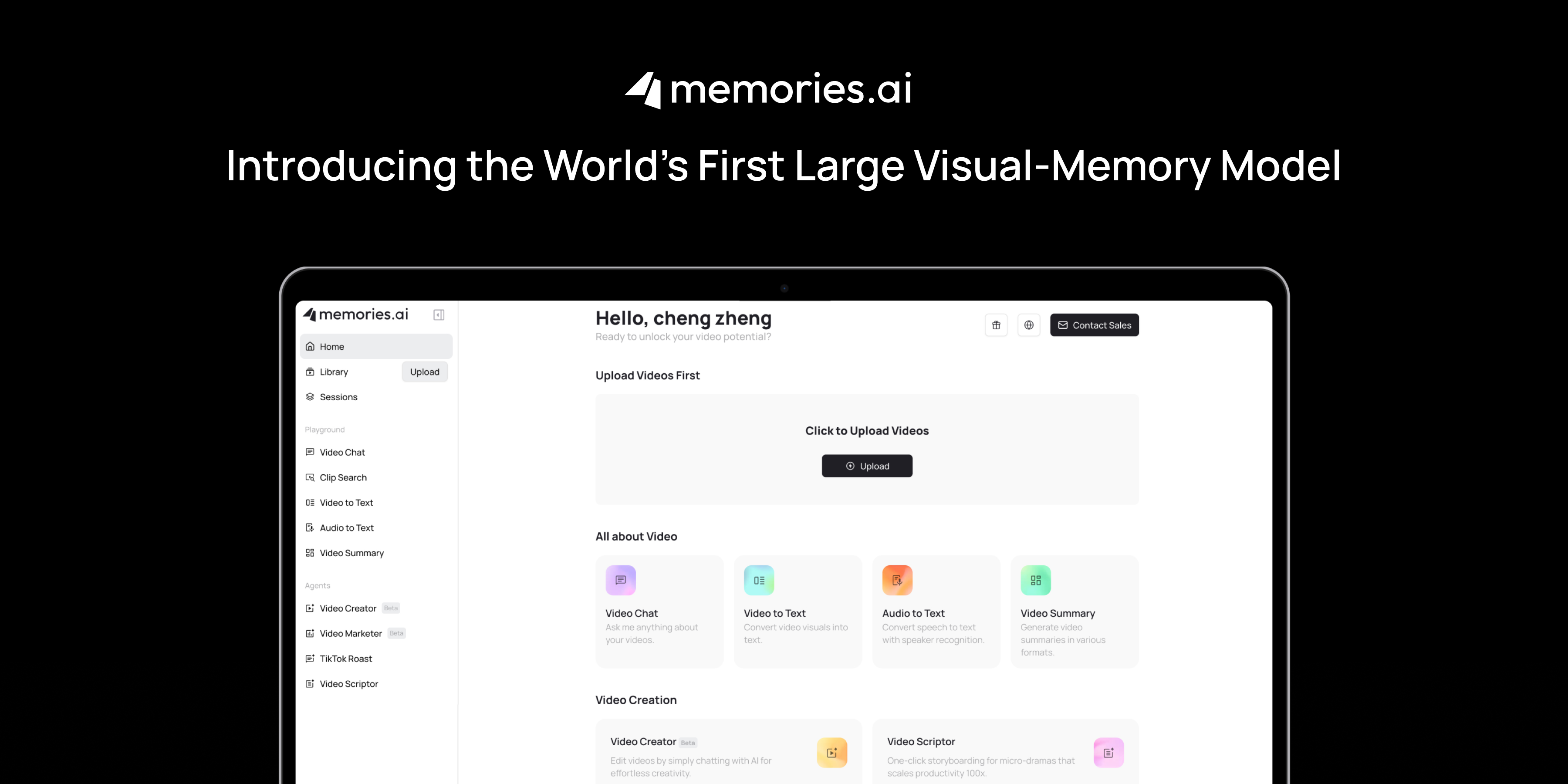
Memories.ai is the most comprehensive TikTok video analysis AI tool on the market in 2026. While most competitors focus on surface-level metrics — views, likes, engagement rates — Memories.ai actually watches the video and breaks down the creative elements that drive performance.
The platform is powered by a Large Visual Memory Model (LVMM) that processes both the visual and audio content of TikTok videos. It doesn't just tell you a video got 5 million views; it tells you why — the hook structure, the editing pacing, the text overlay timing, the CTA placement, and how those elements compare to trending formats across the platform.
What makes Memories.ai particularly valuable for TikTok analysis is its natural language query interface. After analyzing a video, you can ask follow-up questions in plain English: "What makes this hook work?", "How does this compare to other viral videos in the skincare niche?", "What CTA strategy should I use based on this analysis?" The AI responds with specific, data-backed insights rather than generic advice.
The platform also supports cross-platform comparison, so you can analyze how the same content performs across TikTok, Instagram Reels, and YouTube Shorts — essential for brands running multi-platform strategies.
For teams that want to go beyond analysis into content creation, Memories.ai integrates with its TikTok Script Generator and Video Search AI tools, creating a complete workflow from research to production.
Key Features:
- AI-powered visual + audio analysis of TikTok videos (not just metadata)
- Hook, pacing, editing pattern, on-screen text, and CTA placement breakdown
- Script extraction and storyboard breakdown from any TikTok video
- Trend detection across TikTok, Reels, and YouTube Shorts
- Natural language queries for deeper analysis ("Why did this go viral?")
- Cross-platform content comparison
- Content strategy insights from competitor analysis
- API access for developers and enterprise workflows
- SOC 2 compliant data security
Pros:
- Deepest creative analysis available — actually watches the video, not just metrics
- Natural language chat interface makes complex analysis accessible to anyone
- Cross-platform comparison eliminates tool switching
- Script extraction + generation creates a full research-to-creation workflow
- Works with any video link or uploaded file — no platform restrictions
- Free plan available with no credit card required
- SOC 2 compliant for enterprise and agency use
Pricing:
- Free Plan: $0/month (Includes 100 credits per month for basic video analysis and agent tools).
- Paid Plans: The Plus plan starts at $15 per month when billed annually. It is for high-volume use with 5,000 credits. Flexible credit packages are also available, starting at $9.20.
👉 Try Memories.ai TikTok Video Analysis for Free
2. Pentos – Best for TikTok Performance Tracking and Hashtag Analytics
(Best For: Social media managers and agencies tracking TikTok account performance over time)

Pentos is a TikTok analytics platform focused on performance tracking and hashtag monitoring. It's designed for social media managers who need to track specific accounts, hashtags, and songs over time. Rather than analyzing the creative content of individual videos, Pentos excels at surfacing quantitative trends — which accounts are growing fastest, which hashtags are gaining traction, and how specific songs are performing across the platform.
Pentos is particularly useful for brand monitoring and competitive benchmarking. You can set up tracking for your own accounts and your competitors, then compare performance metrics side by side over custom date ranges.
Key Features:
- Account tracking and performance monitoring for TikTok profiles
- Hashtag and song analytics with trend detection
- Competitor benchmarking with side-by-side comparisons
- Export reports for client or stakeholder presentations
- Automated alerts for performance spikes
Pros:
- Strong quantitative analytics for account-level tracking
- Clean interface for monitoring multiple accounts simultaneously
- Useful for agencies managing TikTok campaigns across clients
- Hashtag trend data helps inform content planning
Cons:
- Does not analyze the actual visual or audio content of videos
- No hook analysis, editing pattern detection, or creative breakdown
- Limited to TikTok — no cross-platform comparison
- Pricing can be steep for individual creators
Pricing:
- Plans start at approximately $29/month for basic tracking. Higher tiers required for multi-account monitoring and advanced exports.
3. Exolyt – Best for TikTok Influencer and Campaign Analytics
(Best For: Brands and agencies evaluating influencers and measuring campaign ROI)
Exolyt positions itself as a TikTok analytics and social intelligence platform. Its strongest use case is influencer evaluation — helping brands assess whether a creator's audience, engagement rates, and content style align with their campaign goals before signing a partnership.
The platform provides detailed account-level metrics including follower growth trends, average engagement rates, posting frequency, and audience demographics. It also tracks hashtags and trending content to help with content planning.
Key Features:
- Influencer discovery and evaluation with audience demographics
- Account performance tracking with growth trends
- Hashtag and trending content monitoring
- Campaign tracking and ROI measurement
- Audience overlap analysis for influencer comparisons
Pros:
- Excellent for influencer vetting and partnership decisions
- Detailed audience demographic data
- Campaign-level analytics help measure sponsored content performance
- Covers both organic and paid content analysis
Cons:
- Focused on metrics rather than creative analysis — no hook or editing breakdown
- Does not analyze what's actually happening inside the video
- Primarily TikTok-focused with limited cross-platform support
- Enterprise pricing may be prohibitive for smaller teams
Pricing:
- Free basic plan available. Paid plans start around $49/month, with enterprise pricing for full feature access.
4. Analisa.io – Best for AI-Powered TikTok Profile and Hashtag Analytics
(Best For: Marketers who need quick AI-driven reports on TikTok profiles and hashtags)

Analisa.io is an AI-powered social analytics platform that covers both TikTok and Instagram. Its primary value proposition is generating instant reports on any public TikTok profile or hashtag — no login or account connection required. This makes it useful for quick competitive research when you need a fast snapshot of a creator's performance.
The platform uses AI to analyze engagement patterns, posting schedules, and audience sentiment from comments. It also offers campaign reporting and influencer relationship management features for agencies.
Key Features:
- Instant AI-generated reports on any TikTok profile or hashtag
- Engagement rate analysis and benchmarking
- Posting pattern and optimal timing recommendations
- Comment sentiment analysis
- Campaign reporting and influencer management
- Covers both TikTok and Instagram
Pros:
- No account access needed — analyze any public profile instantly
- Comment sentiment analysis adds a layer beyond basic metrics
- Dual TikTok + Instagram coverage is convenient for cross-platform strategies
- Clean PDF report exports for stakeholder presentations
Cons:
- Reports focus on quantitative metrics, not creative content analysis
- No visual analysis of video hooks, editing, or on-screen text
- AI insights are relatively surface-level compared to deep video analysis tools
- Premium features require higher-tier plans
Pricing:
- Free basic reports available. Premium plans start at approximately $59/month for advanced analytics and unlimited reports.
5. TikBuddy – Best for TikTok Creator Growth Analytics
(Best For: TikTok creators focused on growing their own accounts with data-driven insights)

TikBuddy is a browser-based TikTok analytics tool designed primarily for creators who want to optimize their own growth. It provides detailed insights into your posting performance, best times to publish, trending sounds in your niche, and how your content compares to similar creators.
The tool works as a Chrome extension that overlays analytics directly on the TikTok web interface, making it convenient for creators who want data without leaving the platform. It also includes a trending section that surfaces popular videos, sounds, and hashtags.
Key Features:
- Chrome extension overlay on TikTok web
- Personal account analytics with growth tracking
- Best posting time recommendations
- Trending sounds and hashtags discovery
- Competitor comparison tools
- Video performance breakdown by metric
Pros:
- Convenient Chrome extension means no platform switching
- Good for creator-focused growth optimization
- Trending sound discovery helps with content planning
- Free tier is genuinely useful for basic analytics
Cons:
- Analytics are metric-based, not creative-content-based
- No AI analysis of what's inside the video (hooks, editing, text)
- Chrome extension dependency limits mobile workflow
- Less suitable for agencies or multi-brand management
Pricing:
- Free plan with basic analytics. Pro plans start at approximately $29/month.
6. Socialinsider – Best for Multi-Platform Social Analytics Including TikTok
(Best For: Marketing teams and agencies managing TikTok alongside other social platforms)

Socialinsider is a multi-platform social media analytics tool that includes TikTok as part of a broader suite covering Instagram, Facebook, YouTube, LinkedIn, and Twitter/X. It's built for marketing teams and agencies that need unified reporting across all their social channels.
For TikTok specifically, Socialinsider provides account-level performance metrics, competitive benchmarking, and content performance analysis. Its strength lies in being able to compare TikTok performance against other platforms in a single dashboard.
Key Features:
- Unified dashboard for TikTok + Instagram + YouTube + Facebook + LinkedIn + X
- Competitive benchmarking across platforms
- Content performance analysis with engagement metrics
- Automated reporting and white-label client reports
- Industry benchmarks for comparison
- Team collaboration features
Pros:
- All-in-one platform eliminates the need for separate analytics tools
- Strong reporting and export features for agencies
- Competitive benchmarking provides valuable context
- Industry benchmarks help set realistic performance goals
Cons:
- TikTok analytics are less deep than dedicated TikTok tools
- No creative analysis of video content — metrics only
- Pricing reflects the multi-platform scope and may be high for TikTok-only needs
- Can feel overwhelming for users who only need TikTok data
Pricing:
- Plans start at approximately $99/month. Enterprise pricing available for large agencies.
Quick Comparison Table
| Tool | Primary Focus | Analyzes Video Content | Cross-Platform | Best For | Starting Price |
|---|---|---|---|---|---|
| Memories.ai | Creative video analysis (visual + audio) | Yes — hooks, editing, text, CTAs | TikTok, Reels, Shorts | Deep creative analysis & strategy | Free (100 credits/month), Paid from $9.20 |
| Pentos | Performance tracking & hashtags | No — metrics only | TikTok only | Account monitoring & hashtag trends | ~$29/month |
| Exolyt | Influencer & campaign analytics | No — metrics only | Primarily TikTok | Influencer vetting & campaign ROI | Free basic, Paid from ~$49/month |
| Analisa.io | Profile & hashtag reports | No — metrics only | TikTok + Instagram | Quick competitive snapshots | Free basic, Paid from ~$59/month |
| TikBuddy | Creator growth analytics | No — metrics only | TikTok only | Personal account optimization | Free basic, Paid from ~$29/month |
| Socialinsider | Multi-platform analytics | No — metrics only | All major platforms | Unified cross-platform reporting | ~$99/month |
The key differentiator is clear: most TikTok analytics tools analyze performance metrics (views, likes, engagement rates), while Memories.ai analyzes the actual content of the video (hooks, editing, pacing, audio, text, CTAs). If you want to know what happened, any of these tools will do. If you want to know why it happened, you need a tool that actually watches the video.
5 High-Impact Use Cases for TikTok Video Analysis
Understanding how to analyze TikTok videos is one thing. Knowing when and why to do it is what separates good marketers from great ones. Here are the five highest-impact use cases for TikTok video analysis AI in 2026.
1. Brand Monitoring and Reputation Management
TikTok moves fast, and conversations about your brand can explode overnight — for better or worse. AI-powered video analysis lets you:
- Track brand mentions across visual content that traditional text-based monitoring misses. Your product might appear in a video without being mentioned in the caption or hashtags.
- Analyze sentiment and context around how your brand is being presented. Is the creator using your product genuinely, or is it a negative review?
- Respond quickly to emerging narratives by identifying trending content about your brand before it goes fully viral.
This goes beyond hashtag tracking. A TikTok video analyzer that processes visual content can spot your logo, product, or packaging even when the creator doesn't tag you — giving you complete brand visibility.
Consider a skincare brand that discovers a micro-influencer has been featuring their cleanser in "get ready with me" videos without tagging the brand. Traditional monitoring tools would miss this entirely. AI visual analysis catches it, allowing the brand to reach out for a formal partnership before a competitor does.
2. Competitor Content Analysis
Your competitors are posting on TikTok. AI analysis helps you understand their strategy without spending hours manually reviewing their content:
- Reverse-engineer top-performing competitor videos to understand what hooks, editing styles, and CTAs drive their engagement.
- Identify patterns across their content calendar — do they post at certain times, use consistent formats, or follow specific trending templates?
- Spot gaps in their strategy that represent opportunities for your brand. Maybe they're strong on product demos but weak on educational content, or they're missing a trending format you can own.
With a tool like Memories.ai, you can paste competitor video links and get instant creative breakdowns — turning their successes into your playbook.
For instance, a DTC fitness brand might analyze their top 3 competitors' most-viewed videos and discover that all of them use a "transformation reveal" hook in the first 2 seconds, maintain a cut every 0.8 seconds during workout sequences, and place their product link CTA at exactly the 12-second mark. That's not a coincidence — it's a pattern worth replicating.
3. Trend Spotting and Early Adoption
TikTok trends have a lifecycle measured in days, not weeks. By the time a trend hits mainstream awareness, the algorithm is already deprioritizing it. AI analysis helps you:
- Detect emerging formats and sounds before they peak by analyzing velocity patterns across thousands of videos.
- Understand the structure of trending templates so you can adapt them to your niche quickly and authentically.
- Predict which trends have staying power vs. which are flash-in-the-pan moments not worth your production time.
The difference between riding a trend early and arriving late is often the difference between 5 million views and 5 thousand. Trend analysis AI compresses your research window from days to minutes.
A practical example: in early 2026, the "silent luxury" aesthetic started gaining traction in fashion TikTok before it had a dedicated hashtag. AI video analysis tools detected the visual pattern — muted color palettes, slow pans, minimal text overlays, and ambient audio — across hundreds of videos before the trend had a name. Brands that caught it early owned the conversation. Those that waited for the hashtag to trend were already behind.
4. Influencer Vetting and Partnership Decisions
Before signing a $50,000 influencer deal, you need more than follower counts and average engagement rates. TikTok video analysis helps you:
- Evaluate content quality and consistency by analyzing an influencer's actual videos rather than just their metrics.
- Assess brand alignment by understanding their visual style, tone, audience demographics, and the types of products they naturally integrate.
- Identify fake engagement patterns by looking at the relationship between content quality and engagement metrics. Inflated numbers often don't match creative quality.
- Predict partnership performance by analyzing how similar sponsored content has performed in their niche.
This is where creative analysis tools like Memories.ai add value that metric-only platforms can't match. You're not just seeing that an influencer gets 500K views per video — you're understanding how they get those views and whether their creative approach fits your brand.
Say you're evaluating two fitness influencers for a supplement partnership. Both average 300K views per video. But AI analysis reveals that Creator A uses aggressive, high-energy editing with text-heavy overlays and hard-sell CTAs, while Creator B uses calm, educational pacing with detailed explanations and soft product integrations. For a premium wellness brand, Creator B's style is clearly the better fit — even though the numbers look identical on the surface. That insight is invisible without creative analysis.
5. Content Strategy and Creative Optimization
The most powerful use case is turning analysis into action for your own content:
- A/B test creative elements by analyzing which hooks, editing styles, and CTAs perform best in your niche.
- Build a library of proven structures by extracting scripts and storyboards from top-performing content and adapting them.
- Optimize posting cadence and format mix based on what the data shows works for accounts similar to yours.
- Train your creative team with specific, example-backed feedback rather than vague direction like "make it more engaging."
When you combine TikTok video analysis with the Memories.ai Script Generator, you create a closed loop: analyze what works, generate new scripts based on those patterns, publish, measure, and repeat.
A content agency managing 15 TikTok accounts might use this workflow to analyze the top 10 videos in each client's niche every Monday morning, extract the week's dominant creative patterns, and generate tailored scripts for each account by Monday afternoon. What used to take a full-time strategist an entire week now takes a few hours — with better accuracy because it's driven by data, not subjective judgment.
How to Build a TikTok Content Strategy with AI Insights
Understanding individual video analysis is valuable, but the real power comes from applying AI insights systematically across your content strategy. Here's a framework for turning TikTok video analysis into a repeatable process.
Phase 1: Research and Benchmark
Start by analyzing 20-30 top-performing videos in your niche using Memories.ai. Look for:
- Common hook structures: Do the top videos in your niche open with questions, bold statements, visual pattern interrupts, or text-first approaches?
- Dominant editing styles: What's the average cut frequency? Do top performers use fast cuts, long takes, or a mix?
- CTA patterns: Where do successful creators place their CTAs, and what type of action do they request?
- Audio trends: Are the top videos using trending sounds, original audio, or voiceover? What's the energy level?
Document these patterns in a structured format. They become your creative benchmark — the baseline your content needs to meet or exceed.
Example benchmark document for a fitness niche:- Top hook type: Transformation reveal (before/after in first 2 seconds) — used in 70% of top performers- Average cut frequency: Every 1.2 seconds during workout sequences, every 3 seconds during talking head- Dominant CTA: "Save this for your next gym session" at 80% mark — drives saves, which the algorithm weights heavily- Audio trend: Original voiceover with trending background music at 30% volume- Text overlay style: Bold white text with black outline, 3-4 words max per screen, centered upper third
Phase 2: Develop and Test
Use your analysis insights to create content that builds on proven patterns while adding your unique angle:
- Take high-performing hook structures and adapt them to your brand voice
- Match the pacing and editing style that your niche rewards
- Test different CTA placements and types based on what the analysis showed works
- Use the Memories.ai Script Generator to draft scripts based on viral patterns
Post consistently and track which variations perform best. Aim for at least 3-4 videos per week to generate enough data for meaningful analysis. Don't change too many variables at once — if you're testing a new hook style, keep the rest of the video structure consistent so you can isolate what's driving the difference.
Phase 3: Analyze and Iterate
After two to four weeks of posting, analyze your own content alongside top performers in your niche:
- Which of your videos outperformed? What creative elements drove the difference?
- Where are you falling short compared to the benchmark? Is it hooks, pacing, CTAs, or something else?
- Have new trends emerged that you should incorporate?
Use the Video Search AI tool to compare your content against trending videos and identify specific optimization opportunities.
Phase 4: Scale and Systematize
Once you've identified what works, build it into a repeatable system:
- Create hook templates based on your top performers
- Build a library of proven editing patterns for your editors
- Establish CTA best practices specific to your audience
- Set up regular competitor analysis cycles (weekly or bi-weekly)
This is how brands go from sporadic TikTok success to consistent, predictable content performance. AI analysis removes the guesswork and replaces it with evidence.
Common Mistakes to Avoid
Even with AI analysis tools, there are pitfalls that can undermine your strategy:
- Copying instead of adapting. Analysis should inform your creative direction, not turn you into a clone. The algorithm rewards originality within proven frameworks — not carbon copies of viral content.
- Over-optimizing for one metric. A video optimized purely for views might sacrifice engagement quality. Balance reach-focused analysis with conversion-focused insights.
- Ignoring your own data. Analyzing competitors is valuable, but your own content data is the most relevant signal. Always include self-analysis in your workflow.
- Analysis paralysis. Don't spend so much time analyzing that you forget to create. Set a fixed time budget for research (e.g., 2 hours per week) and spend the rest producing content.
- Chasing yesterday's trends. AI helps you spot trends early, but if the analysis shows a trend is already peaking, it's often better to wait for the next wave than to arrive late to a saturated format.
Free vs. Paid TikTok Analysis: What You Actually Need
With so many tools available, it's worth understanding what you can get for free and when it makes sense to invest in paid features.
What Free Plans Cover
Most free tiers — including Memories.ai's 100 credits/month — give you enough to:
- Analyze a handful of videos per week for personal content research
- Test the tool's capabilities before committing to a paid plan
- Get basic creative breakdowns (hook analysis, script extraction)
- Run occasional competitor checks on specific videos
For solo creators posting 2-3 times per week, a free plan can be sufficient for meaningful improvement. The key is to be strategic about which videos you analyze — focus on the top performers in your niche, not random content.
When to Upgrade to Paid
Paid plans become worth the investment when:
- You're managing multiple accounts or clients. Agencies and social media managers need volume. Analyzing 20-30 videos per week across multiple niches requires more credits than free plans provide.
- You're running ad campaigns. The ROI on ad spend optimization often pays for the analysis tool many times over. Understanding what creative elements drive paid performance can save thousands in wasted ad budget.
- You need API access. Enterprise teams integrating analysis into custom dashboards or automated workflows need developer-level access that only comes with paid plans.
- Speed matters. If your competitive advantage depends on catching trends before others, the ability to analyze at volume and at speed is worth the investment.
- You need team collaboration features. Sharing insights, exporting branded reports, and maintaining a team-wide analysis library requires paid-tier functionality.
The bottom line: start free, prove the value with your first few analyses, and upgrade when the insights start directly impacting your results. At $15/month for Memories.ai's Plus plan, the tool pays for itself if it helps even one video perform significantly better.
FAQ: TikTok Video Analysis with AI
What is a TikTok video analyzer?
A TikTok video analyzer is a tool that examines TikTok video content to extract insights about what drives performance. Basic analyzers track metrics like views, likes, and engagement rates. Advanced AI-powered analyzers like Memories.ai go deeper — analyzing the actual visual and audio content of the video to break down hooks, editing patterns, on-screen text, CTA placement, and other creative elements that influence the algorithm and audience behavior.
How do I analyze TikTok videos with AI?
The simplest method is to paste a TikTok video URL into an AI analysis tool. With Memories.ai, you paste the link, the AI processes the visual and audio content, and you receive a detailed breakdown of the video's creative structure — including hook analysis, pacing, editing patterns, script extraction, and CTA evaluation. You can then ask follow-up questions in natural language to dive deeper into any aspect of the analysis.
Can AI tell me why a TikTok video went viral?
AI can identify the creative elements that likely contributed to a video's performance — effective hooks, optimal pacing, trending sound usage, strong CTAs, and alignment with current platform trends. While no tool can guarantee virality (the algorithm has randomness baked in), AI analysis dramatically improves your understanding of what works and why, helping you consistently produce higher-performing content.
What's the difference between TikTok analytics and TikTok video analysis?
TikTok analytics tools (like Pentos, Exolyt, or TikTok's native analytics) focus on performance metrics — view counts, engagement rates, follower growth, and audience demographics. TikTok video analysis tools focus on the content itself — what's happening inside the video that drives those metrics. You need both: analytics tell you what happened, and video analysis tells you why.
Can I analyze competitor TikTok videos?
Yes. Any public TikTok video can be analyzed by pasting its URL into a tool like Memories.ai. You'll get the same detailed creative breakdown as you would for your own content — hook analysis, editing patterns, script extraction, CTA evaluation, and more. This makes competitor analysis fast and systematic rather than manual and subjective.
Does Memories.ai work with Instagram Reels and YouTube Shorts too?
Yes. Memories.ai supports cross-platform video analysis, so you can analyze TikTok, Instagram Reels, and YouTube Shorts content in the same tool. This is particularly valuable for brands running multi-platform strategies who need to understand how content performs differently across platforms and adapt their creative approach accordingly.
Is my data secure when using AI video analysis tools?
With Memories.ai, yes. The platform is SOC 2 compliant, meaning it meets rigorous standards for data security, availability, and confidentiality. Your video data is not used for training external AI models, and content is not stored unless you explicitly choose to save it in your account.
How much does TikTok video analysis cost?
Costs vary significantly across tools. Memories.ai offers a free plan with 100 credits per month, making it accessible for individual creators and small teams. Paid plans start at $9.20 for flexible credit packages, with the Plus plan at $15/month (billed annually) for high-volume usage. Metric-focused tools like Pentos and Exolyt range from $29-$99/month depending on features and scale.
Can I use TikTok video analysis for ad creative?
Absolutely. Analyzing top-performing organic content in your niche is one of the best ways to inform your paid creative strategy. By understanding what hooks, pacing, and CTAs drive organic engagement, you can apply those same principles to your TikTok ads — resulting in ad creative that feels native to the platform and performs better than traditional advertising approaches.
Is there an API for TikTok video analysis?
Memories.ai offers API access for developers and enterprise teams who want to integrate TikTok video analysis into their own workflows, dashboards, or content management systems. This is especially useful for agencies managing multiple clients or brands running analysis at scale.
The Bottom Line
TikTok video analysis with AI isn't about replacing creative intuition — it's about informing it with data. The creators and brands that win on TikTok in 2026 aren't the ones who guess best. They're the ones who systematically understand what works, why it works, and how to apply those insights at scale.
Most TikTok analytics tools stop at the surface — telling you what your numbers look like. To understand the creative mechanics that actually drive those numbers, you need a tool that watches the video the way a human strategist would, but at machine speed and scale.
That's what Memories.ai TikTok Video Analysis delivers. It's the difference between knowing a video got 5 million views and understanding exactly why — and how to replicate it.
Whether you're analyzing competitors, vetting influencers, spotting trends, or optimizing your own content, the workflow is the same: paste a link, get insights, ask questions, and act on the answers.
👉 Start Analyzing TikTok Videos with Memories.ai — Free
Related Resources
- Analyze TikTok videos with Memories.ai TikTok Video Analyzer — dedicated AI analysis for TikTok content
- TikTok video analysis AI tool — hooks, trends, and engagement analysis
- Analyze videos from 20+ platforms with Memories.ai — the AI Video Analyzer hub
- Compare Memories.ai vs ChatGPT for video understanding — purpose-built video AI vs general-purpose AI
- Memories.ai pricing and plans — free credits every month, no credit card required
.png)

.png)