Project LUCI is an on-device visual AI research initiative that unifies personal memory across PC, wearables, and IoT. At Microsoft Build 2026, Memories.ai is demonstrating how Windows ML and the Qualcomm X2 Elite enable real-time indexing of a user's visual life with zero cloud latency and total privacy.
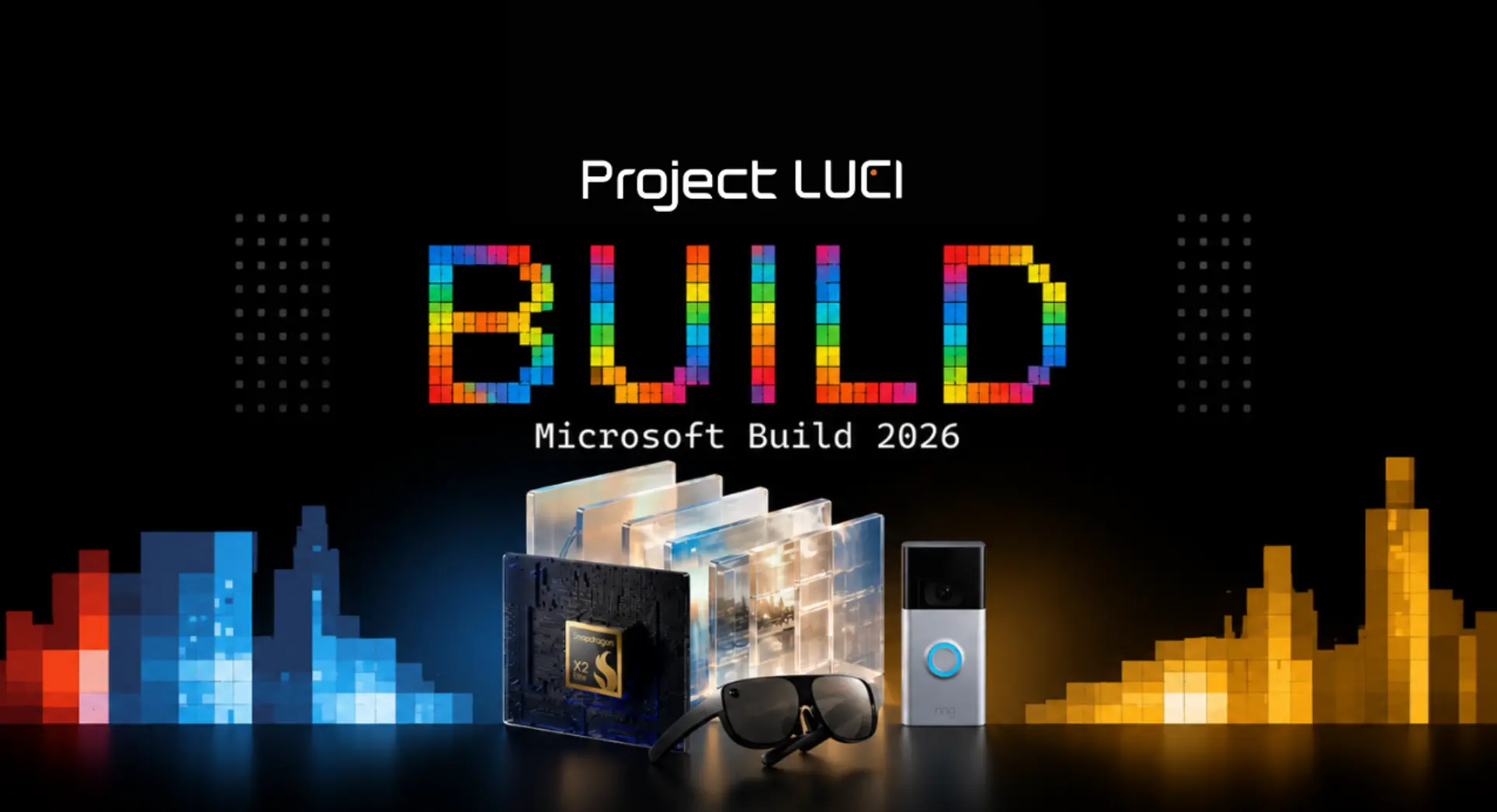
Project LUCI is a local-first visual AI research initiative designed to solve "digital amnesia" by automatically indexing and correlating everything a user sees across their ecosystem. Unlike cloud-based assistants, LUCI processes data locally using a proprietary 3B-parameter embedding model and Windows ML, ensuring that personal memories never leave the user's silicon.
This year, Project LUCI is being featured across two primary venues at Microsoft Build:
On the main stage, we are demonstrating the core LUCI Desktop experience. This demo showcases:
And that's not all, Memories.ai is opening early access to LUCI Desktop for enterprise teams right here: https://luci.memories.ai/
For the full vision of unified memory, visit Booth F110. This demo illustrates how Project LUCI bridges the gap between digital and physical worlds by unifying three distinct data streams:
| Memory Source | Hardware Platform | Function in LUCI |
|---|---|---|
| Digital World | Qualcomm X2 Elite | Screen capture and application state indexing |
| Physical World | Snapdragon AR Glasses | Real-time visual indexing of the user's field of view |
| Home Environment | Ring Security Cameras | Integration of home events into the unified memory timeline |
The transition from cloud-AI to Foundry Local and on-device processing provides three critical advantages for personal memory:
No. Project LUCI uses local Windows ML pipelines to generate vector embeddings of visual frames. The raw video is not uploaded; only the private, local index exists on your machine.
The Unified Memory demo is a joint demonstration by Memories.ai, Qualcomm, and Microsoft. It showcases LUCI unifying data from three sources: the Qualcomm X2 Elite PC, Snapdragon AR wearables, and Ring home security systems.
You can see the desktop-only demo on the Microsoft Build Main Stage or experience the full Trifecta at Booth F110 from June 1–3 in San Francisco.
Memories.ai is the developer of the world's first Large Visual Memory Model (LVMM). Its technology gives machines the ability to see, understand, and recall visual experiences across unlimited timeframes. The platform powers persistent, searchable memory for video at scale. Founded in 2024 by former Meta researchers, the company is backed by Susa Ventures, Samsung Next, Crane Venture Partners, Fusion Fund, Seedcamp and Creator Ventures. Learn more at memories.ai.
