Giving 100 Million Cameras a Memory: Memories.ai Now Integrates with Ring Devices | Memories.ai
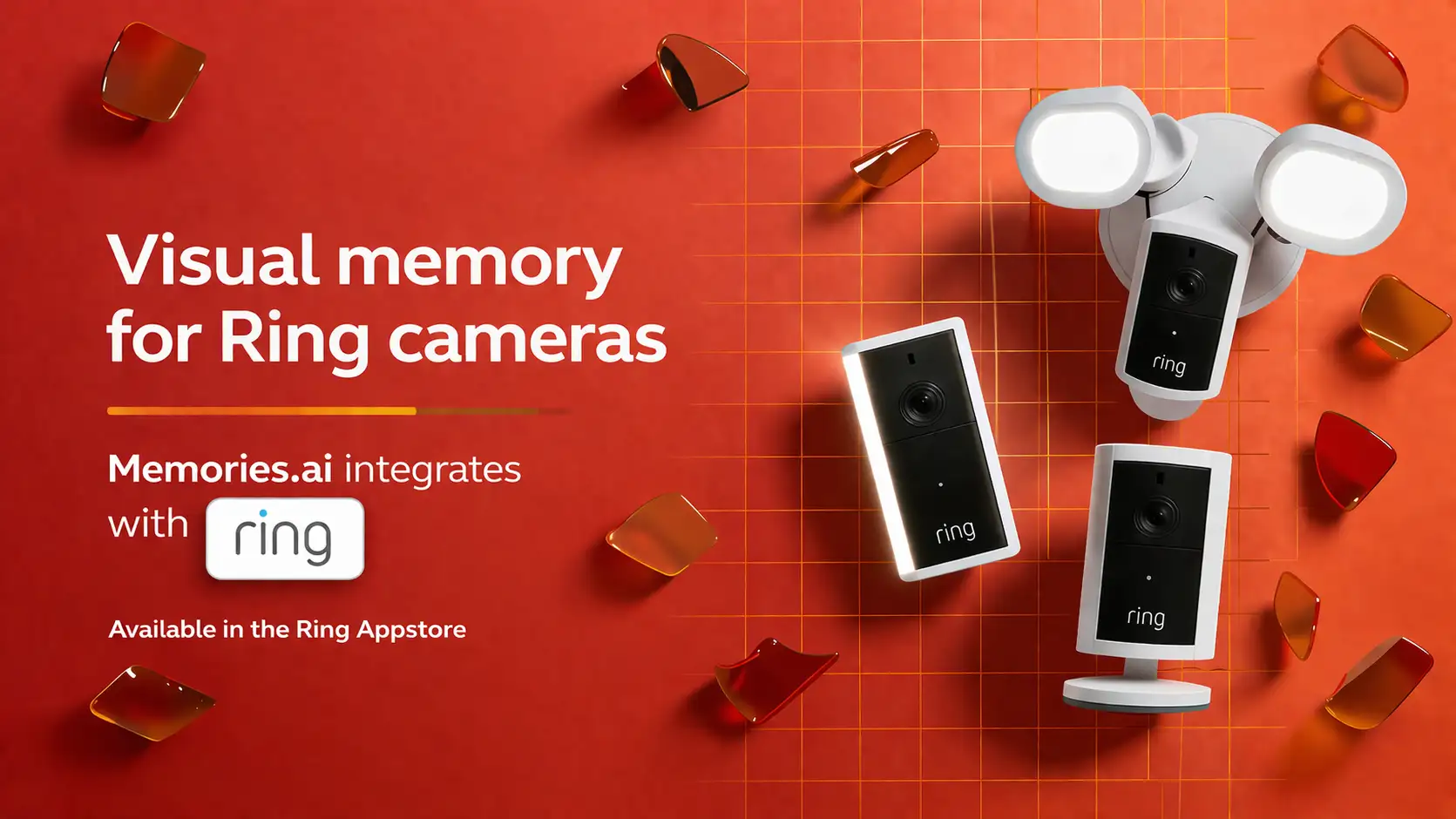
Memories.ai is now available in the Ring Appstore, bringing visual memory technology to Ring cameras used in homes and businesses around the world.


Giving Cameras Memory: Memories.ai Now Available in the Ring Appstore
By Shawn Shen, Co-founder & CEO, Memories.ai
Today marks an important step in our mission to build the memory layer for AI.
Memories.ai is now available in the Ring Appstore, bringing our visual memory technology to Ring cameras used in homes and businesses around the world.
But this isn't just about cameras.
It's about what happens when the physical world gets memory.
The Moment We Knew This Was Possible
When my co-founder and I were at Meta Reality Labs, we spent years building AI systems that could understand video at a level far beyond traditional approaches.
Not just short clips.
But hours, days, even months of continuous footage — with the ability to retain context over time.
The technology worked. The problem was that it lived in a research lab.
We often talked about what would happen if this kind of visual memory existed in everyday environments. Not in a data centre. Not behind a login screen. But in the real world — at your front door, in your driveway, around your home.
When Ring announced its developer platform, it opened the door to bringing that vision into real environments at scale.
We built Memories.ai to make that possible.
From Recording to Remembering
Today's cameras are powerful, but limited.
They record footage.
They store it.
They send alerts.
But they don't understand what they see.
And they don't remember.
Every time you check your camera, you're starting from zero — manually searching through moments to find what matters.
Memories.ai changes that.
Our visual memory system transforms continuous video into structured, searchable memory. Instead of isolated clips, it builds context over time — learning patterns, identifying what's typical, and surfacing what's meaningful.
Think of it this way:
Recording is storage.
Memory is understanding.
What Visual Memory Enables
With Memories.ai running alongside Ring cameras, video becomes more than footage — it becomes context.
Your system can recognise patterns such as:
- A regular delivery arriving at a similar time each week
- The difference between everyday activity and something unusual
- The rhythm of a normal day versus something out of place
Instead of reviewing hours of footage, you can quickly understand what happened — and why it matters.
This isn't just motion detection.
It's contextual awareness built over time.
Toward a More Intelligent Home
What excites us most isn't just what visual memory does today — it's what it enables next.
When cameras can build memory, they become the foundation for a new kind of intelligent system:
- A home that understands patterns.
- A system that learns routines.
- An experience that surfaces what matters without constant input.
Instead of searching for information, it comes to you:
- When something important happens
- When patterns change
- When something unusual occurs
This is a shift from reactive tools to systems that are aware, contextual, and continuously improving.
How It Works
Traditional video systems process footage moment by moment, often losing context as time passes.
Memories.ai takes a different approach, inspired by how people remember.
Instead of storing everything as raw video, it:
- Compresses continuous footage into meaningful representations
- Indexes information across time and context
- Enables fast retrieval of relevant moments
The result is a system that doesn't just capture video — it builds memory from it.
Built with Privacy in Mind
We recognise the responsibility that comes with building systems that interact with real-world environments.
Memories.ai is designed with privacy and control at its core:
- No facial recognition
- No selling or sharing of user data
- Full user control over stored information
- Enterprise-grade security standards
We believe intelligence and privacy should go hand in hand.
Visit: Memories.ai homepage
Enterprise solutions: memories.ai/contact